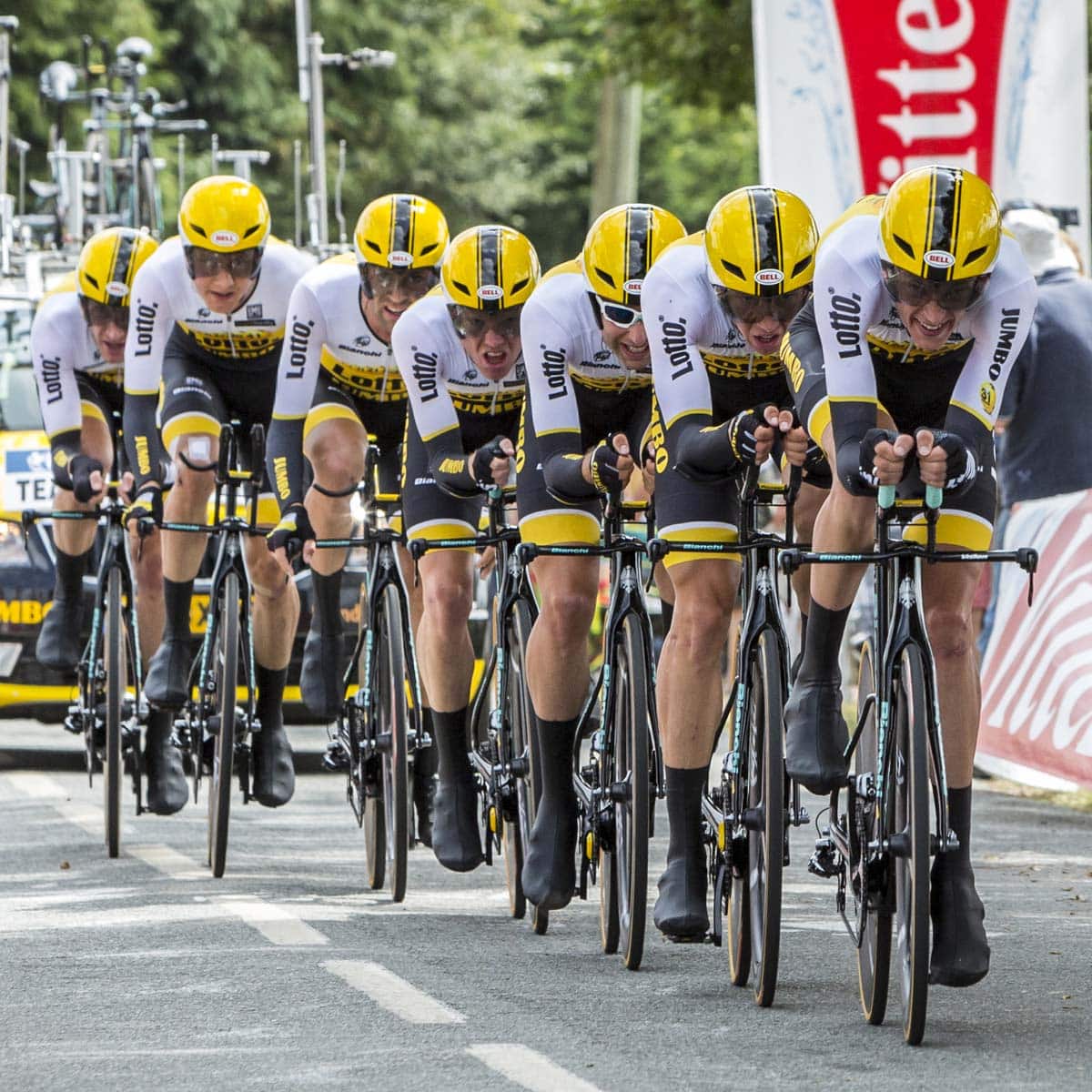
The Team Time Trial (TTT) is often described as the “ultimate discipline” in endurance sports, representing a masterclass in synchronized efficiency and collective suffering. Unlike an individual time trial, where an athlete faces the wind alone, a TTT requires a squad of riders to operate as a single, high-speed machine. By rotating in a tight formation—where the lead rider handles the full brunt of the wind before peeling off to recover in the slipstream—a team can sustain speeds significantly higher than any solo rider could manage. For a cyclist, the TTT is a test of trust; the group is only as fast as its ability to keep every member on the “limit” without snapping the elastic.
The technical complexity of a TTT lies in the “pull.” The rider at the front must maintain a pace that is fast enough to gain time but steady enough not to “drop” their teammates. Transitions between pulls must be surgical; a gap of even a few inches can force the following rider to burn through their anaerobic battery just to stay attached. In professional road racing, the team’s time is typically recorded when the fourth or fifth rider crosses the line (depending on the specific race rules). This creates a brutal tactical dilemma: the team must decide when to “burn” their weaker riders—having them pull until exhaustion—to protect the core group that will ultimately set the official time.
While most iconic in Grand Tours, the principles of the TTT apply to any team-based endurance effort, including “squad” challenges or corporate triathlon relays. Success in a TTT isn’t determined by the strongest individual, but by the team that communicates most effectively under the duress of pain. It is a world where ego is sacrificed for the aerodynamics of the “herd.”