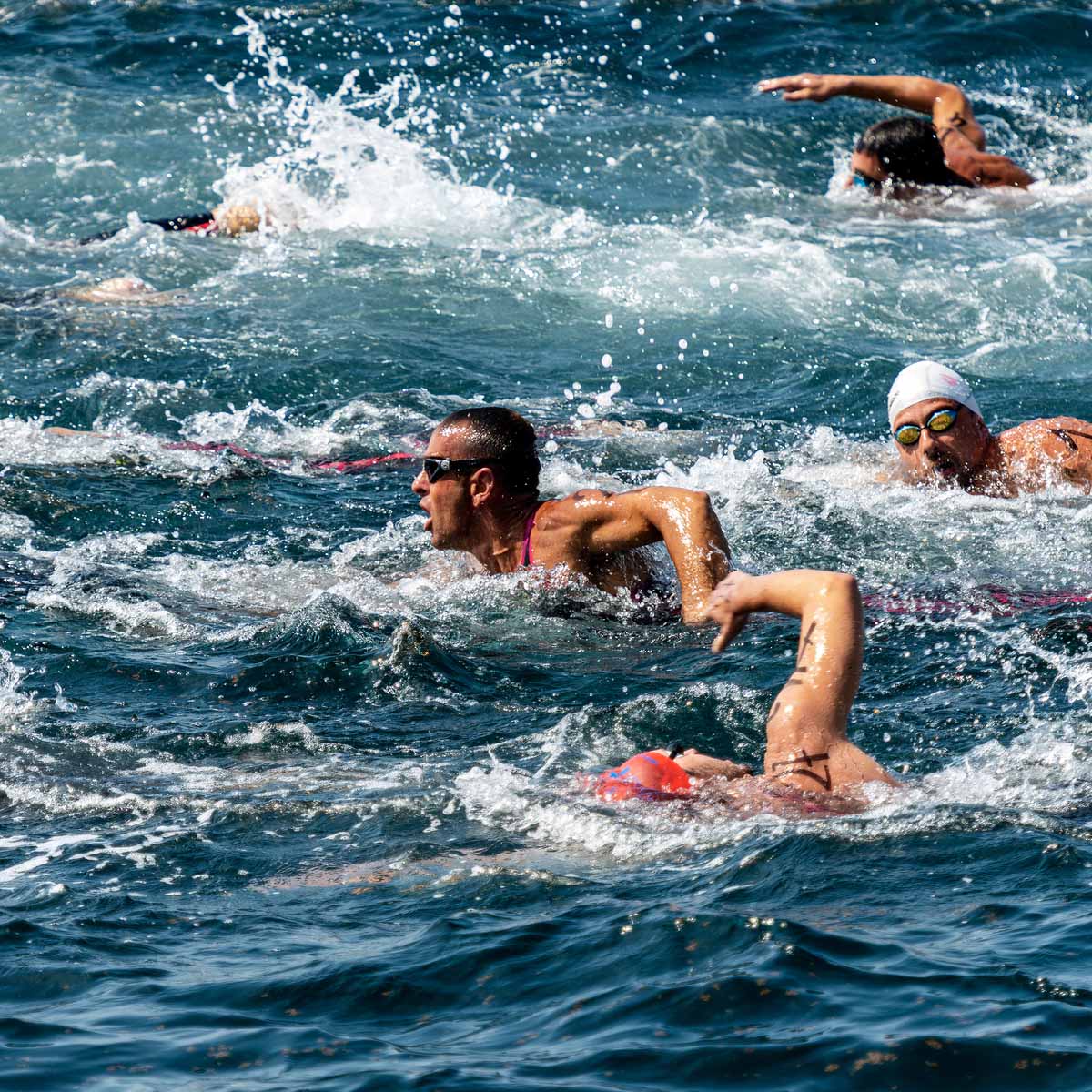
Sighting is a specialized navigational technique used in open water swimming where an athlete briefly lifts their eyes above the waterline to verify their heading and adjust their course. Unlike pool swimming, where lane lines and bottom markers provide constant orientation, open-water environments require the swimmer to be their own navigator. For a swimmer or triathlete, efficient sighting is the difference between a direct line to the next buoy and wasting critical energy by “zigzagging” off-course.
There are multiple mechanics of sighting, from briefly lifting the head and looking forward during the “breathe phase” of the stroke, to a subtle “crocodile eye” lift—lifting only the goggles high enough to see ahead while keeping the mouth and chin submerged to maintain a horizontal body position. This latter movement is ideally integrated into the catch phase of the stroke, allowing the swimmer to peek forward without dropping their hips or disrupting their rhythm. In a high-stakes race, sighting too frequently can create unnecessary drag and neck fatigue, while sighting too infrequently can lead to significant navigational errors. Mastering the balance between speed and orientation is an essential component of an athlete’s success in the water.
In a competitive field of swimmers, sighting also serves a tactical purpose, allowing an athlete to monitor the group and stay on the feet of a faster swimmer to benefit from drafting. Whether you are navigating the choppy waters of a coastal bay or participating in a SUP-supported swim at training camp, the ability to sight landmarks and buoys with minimal effort is a vital skill. It transforms the open water from a disorienting obstacle into a predictable, manageable course.