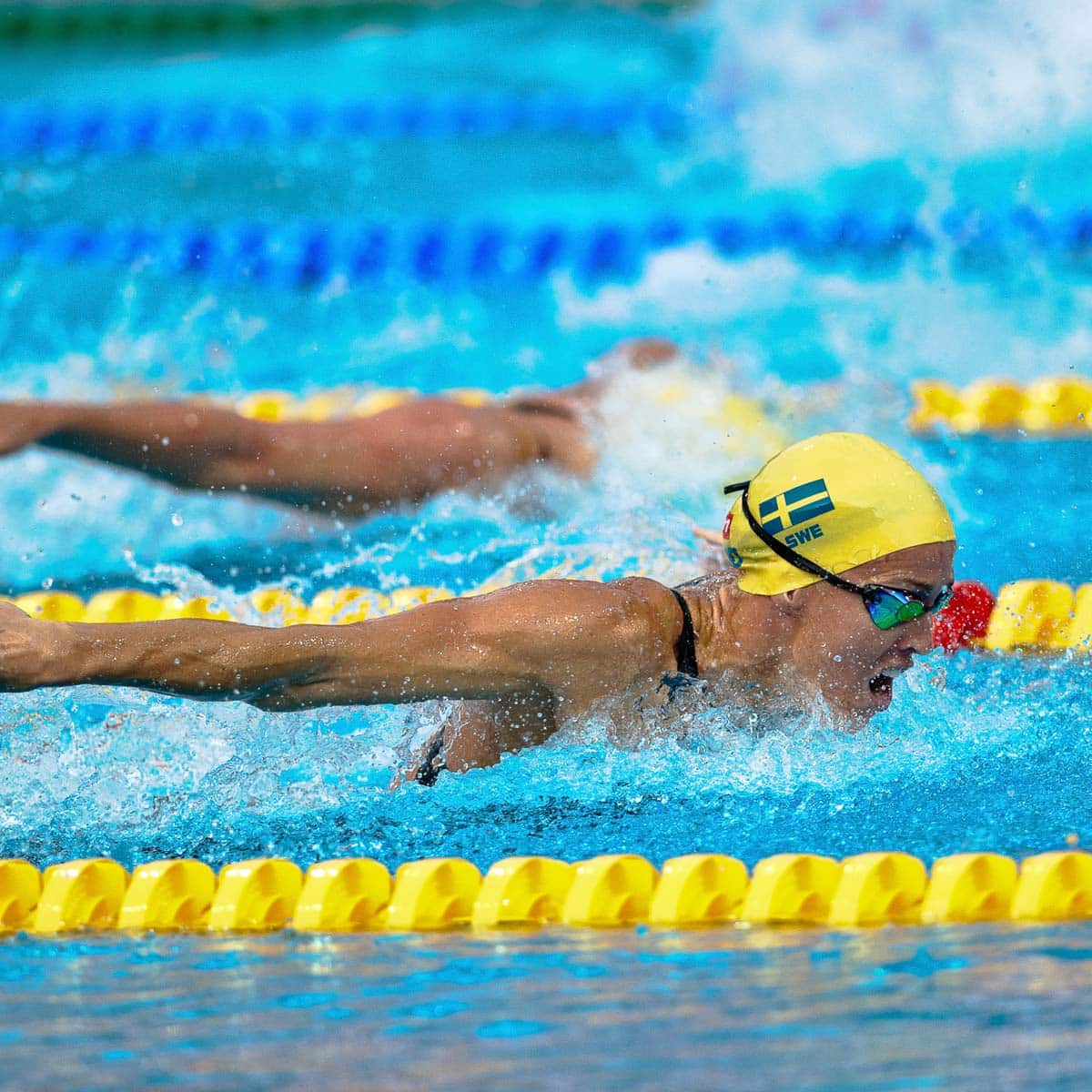

The Butterfly is widely considered the most technically demanding and physically taxing of the four competitive swimming strokes. Defined by a simultaneous overhead arm recovery and a rhythmic, undulating “dolphin kick,” the stroke requires a high degree of core integration and upper-body power. Unlike the rotational mechanics of freestyle or backstroke, the butterfly relies on a symmetrical, wave-like movement of the body that begins at the chest and travels through the hips to the feet. While it is a staple and Olympic favorite in competitive pool racing and individual medley (IM) events, in triathlon and open-water swimming—is almost exclusively restricted to the training environment.
In an endurance context, the butterfly serves as a potent tool for building “functional armor.” Triathletes and long-distance swimmers incorporate it into their training blocks to enhance shoulder girdle mobility, strengthen the core, and improve respiratory conditioning. Because the stroke requires a precise breathing rhythm and an explosive exit from the water, it forces the athlete to manage a high metabolic cost, making it an excellent drill for developing power and anaerobic capacity. However, for actual racing, the butterfly is notoriously inefficient over long distances. The energy required to lift both arms and the head above the water simultaneously is significantly higher than the streamlined, alternating recovery of the front crawl (freestyle). Using the butterfly in an open-water race would lead to a rapid depletion of the “anaerobic battery,” likely resulting in a DNF before ever reaching the first transition.
For the endurance athlete outside of competitive swimming, the butterfly is a “diagnostic” stroke. It reveals imbalances in shoulder strength and flaws in the undulating timing that might otherwise be hidden by the repetitive nature of freestyle. While you will likely never see an athlete perform the butterfly during the swim leg of an Ironman, its presence in a training plan is a marker of a well-rounded athlete. It is the stroke that builds the strength needed to navigate the infamous washing machine of a crowded race start, ensuring the shoulders and core are resilient enough to maintain a high power output when the environment becomes unforgiving.