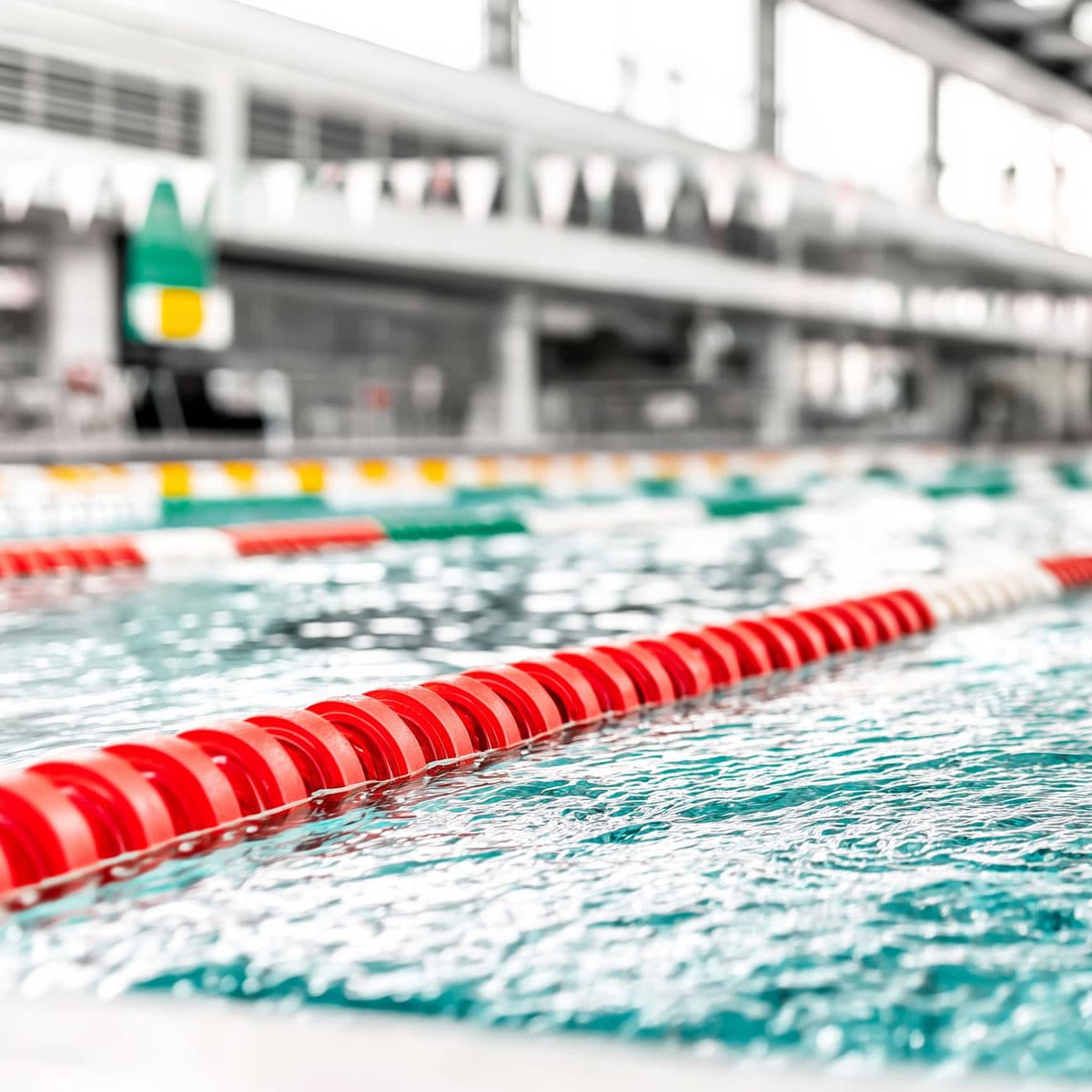
Lane Lines (often called racing lanes or “anti-wave” ropes) are the buoyant, tensioned dividers that segment a swimming pool into dedicated lanes for training and competition. Far from being simple floating markers, modern lane lines are sophisticated pieces of hydraulic engineering. They consist of a series of plastic, finned turbine discs threaded onto a stainless steel cable. These discs are designed to rotate freely, capturing the kinetic energy of a swimmer’s wake and dispersing it downward rather than allowing it to bounce into the adjacent lane.
In the high-stakes environment of a swim meet, the quality of the lane lines can be the difference between a new personal best and a “washed out” performance. By neutralizing surface turbulence, these lines create “quiet water,” allowing athletes to maintain a consistent cognitive cadence and focus entirely on their stroke mechanics. Beyond the pool, the same visual principles are often applied to open-water swim starts and finish chutes—providing a critical sightline for athletes emerging from the “washing machine” of a mass start toward the safety of the timing mats.
In the world of endurance, lane lines represent more than just boundaries; they are the framework for discipline. They turn a chaotic body of water into a structured environment where the only thing that matters is the distance between you and the wall.