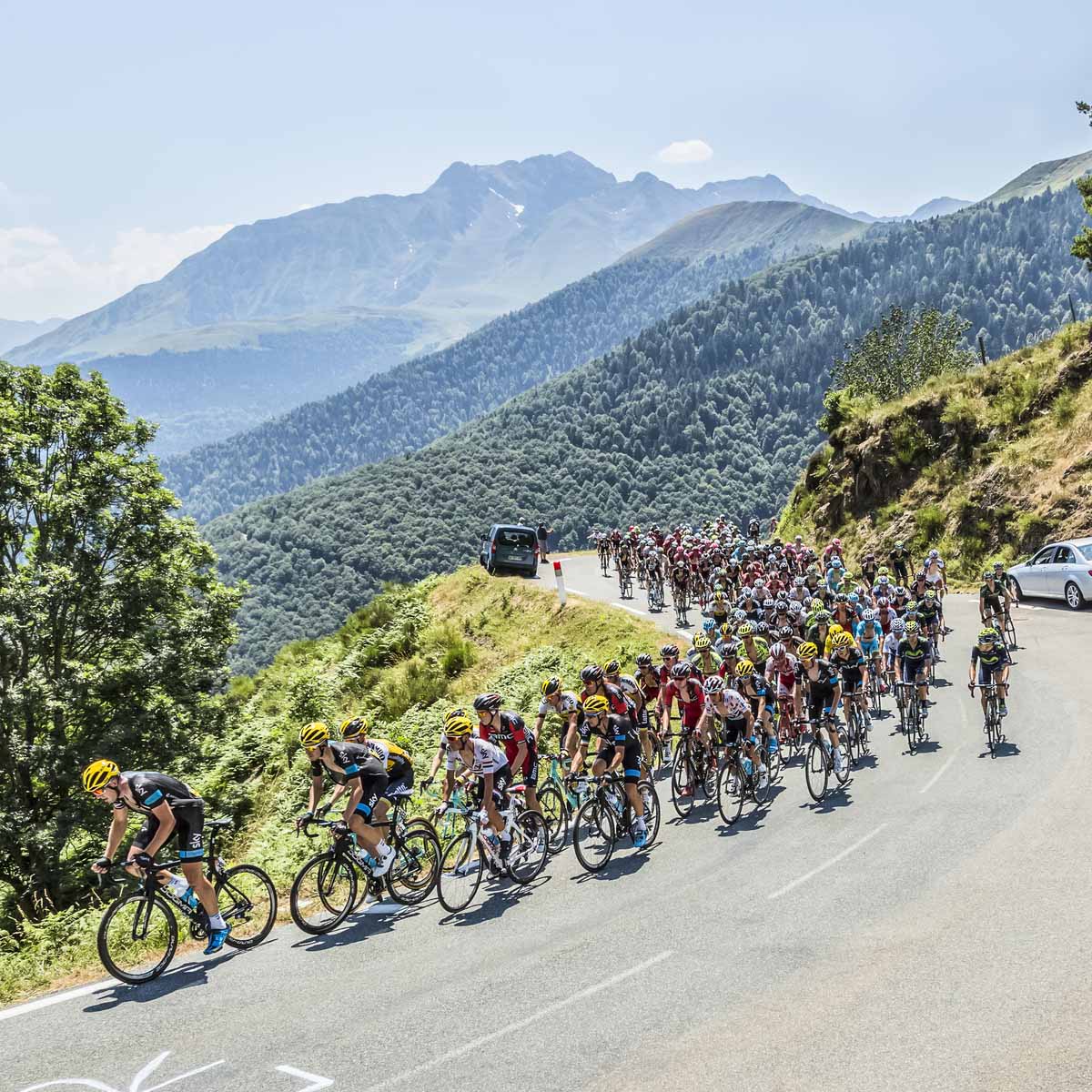
The Peloton, derived from the French word for “platoon,” is the primary mass of riders in a road cycling race or draft-legal triathlon. It is a living, breathing organism of collective efficiency, where athletes ride in a dense, synchronized formation to exploit the physics of the slipstream. Within the peloton, wind resistance is reduced by as much as 40%, allowing the “herd” to travel at speeds that would be impossible for a solo rider to sustain. The peloton is not just a group; it is a tactical arena where energy conservation is balanced against the constant risk of crashes and the mental fatigue of high-speed proximity.
The internal dynamics of the peloton are governed by a complex set of unwritten rules and team hierarchies. At the front, teams work to “protect” their leaders from the wind or to reel in a breakaway, while further back, riders must navigate shifting gaps and sudden changes in cadence. The shape of the peloton is highly reactive—it will stretch into a long, thin line (known as “stringing out”) when the pace is high or a crosswind hits, and bunch up when the road widens or the pace slackens. Being “spat out” or falling Off The Back of the peloton can be the end of an athlete’s contention for the podium, as the energy required to bridge back to the group solo is immense.
While the term is synonymous with elite outdoor racing, it has recently entered the cultural mainstream via Peloton Interactive, the indoor cycling company. However, the true peloton remains the physical, high-stakes formation found on the road – the ultimate expression of human collaboration in pursuit of individual victory.